
In the heart of Dhaka, specifically in areas like Uttara and Gulshan, a silent change is happening beneath the concrete. For decades, the “septic tank” was the unseen (and often unsmellable) standard for waste management. But as we move through 2026, with the city’s groundwater dropping by an alarming 2 to 3 meters every year, the old ways are no longer enough.
The launch of Daiki Axis Bangladesh, a subsidiary of the world’s largest Johkasou manufacturer, has signaled a paradigm shift in how we treat our most precious resource: water. This isn’t just about following new RAJUK mandates; it’s about a smarter, sludge-free sewage treatment plant future.
The Silent Crisis: Why Traditional Septic Tanks are Failing Dhaka
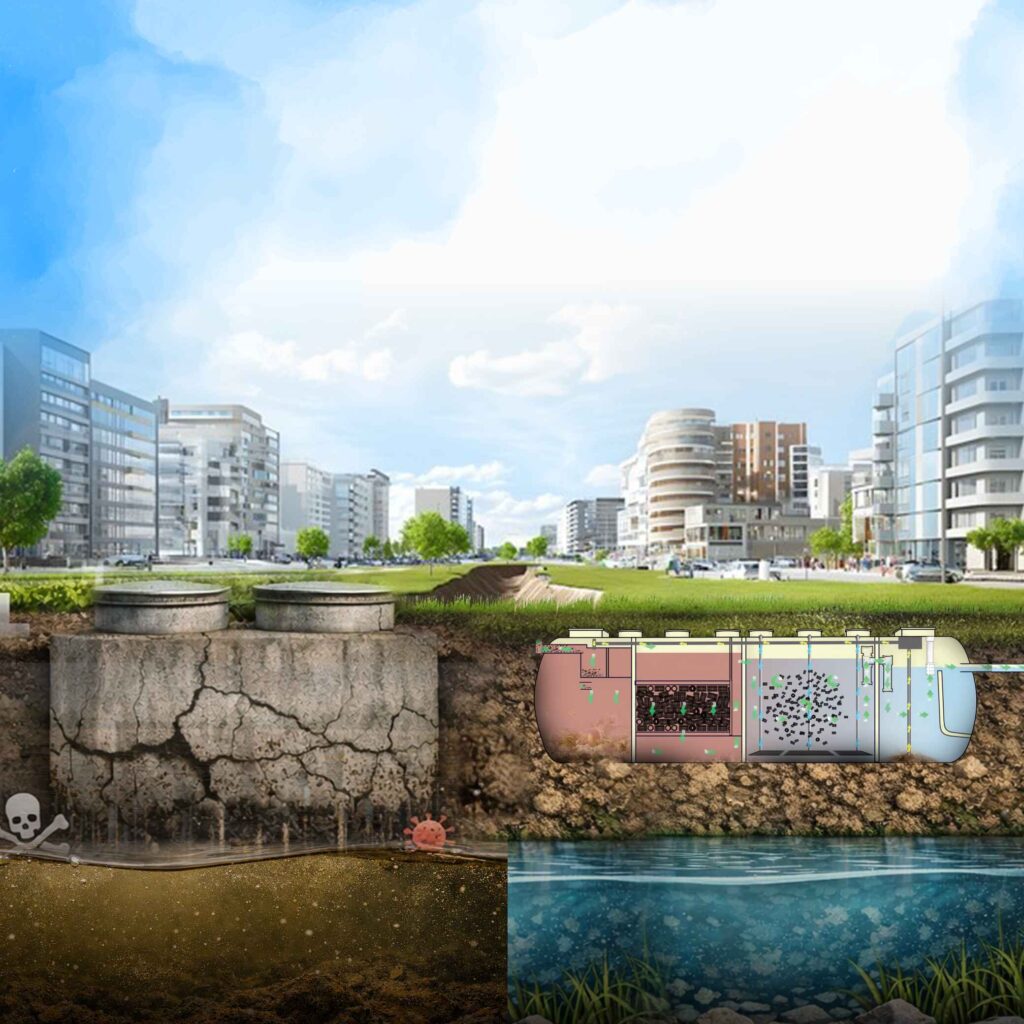
Traditional septic tanks in Bangladesh were designed to store waste, not treat it to modern standards. Most existing systems only provide primary settlement, leaving the effluent rich in pathogens and organic pollutants that eventually seep into our over-stressed aquifers.
With the Environment Conservation Rules (ECR) 2023 now enforcing strict BOD limits of 30–40 mg/L, the traditional septic tank has effectively become a legal liability. Furthermore, the massive production of sludge in older systems creates a logistical nightmare for building managers, requiring frequent, expensive, and often unhygienic cleaning.
Enter Japanese Johkasou: Sludge-free Sewage Treatment Plant
The word “Johkasou” literally translates to “purification tank.” Unlike a septic tank that simply holds waste, a Johkasou system is a prefabricated, decentralized sewage treatment plant that purifies wastewater at the source.
How the Magic Happens (The 5-Chamber Secret)
A Daiki Axis Johkasou system utilizes a sophisticated biological process housed in a single, high-strength FRP (Fiber-Reinforced Plastic) tank.
- Sedimentation & Separation: Gravity separates solids from the influent.
- Anaerobic Filtration: Anaerobic bacteria break down complex organic matter without needing oxygen.
- Moving Bed Aerobic Chamber: High-efficiency blowers introduce oxygen, allowing aerobic bacteria to “eat” the remaining pollutants.
- Recirculation System: A unique feature of Daiki Axis technology is its ability to repeat nitrification and denitrification processes, ensuring advanced treatment that meets international standards.
- Disinfection: The final stage ensures the water is pathogen-free and safe for reuse or discharge.
Key Features of Daiki Axis STP: Why it’s the Leader in Bangladesh
As the world’s biggest Johkasou manufacturer, Daiki Axis brings 65 years of Japanese expertise to the local market. Their systems are designed specifically to handle the unique challenges of Bangladesh’s climate and urban density.
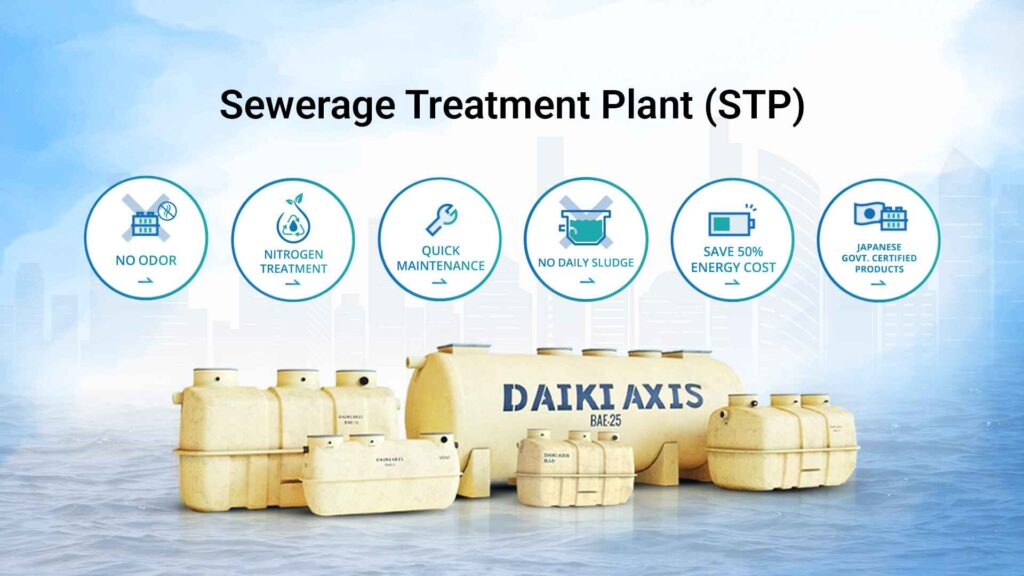
- Sludge-Free Potential: One of the most trending topics in 2026 is the shift toward sludge-free wastewater solutions. Because Johkasou utilizes advanced biological decomposition, it produces significantly less sludge than conventional systems, reducing maintenance headaches and costs.
- FRP Durability: In the humid and often corrosive environment of Bangladesh, the FRP wastewater tank is a game-changer. These tanks are lightweight, easy to install in 3–7 days, and can last for decades without the risk of leakage or structural failure found in concrete tanks.
- IoT-Enabled Smart Monitoring: Modern Daiki Axis units come with IoT capabilities, allowing building managers in Dhaka or Chittagong to monitor treatment performance in real-time from their smartphones.
- Silent and Odor-Free: Operating at noise levels below 50 dB (quieter than a normal conversation), these units can be installed directly under parking spots or driveways without disturbing residents.
Decentralized Sewage Treatment Plant Price in Bangladesh: Is it Worth It?
Transparency in pricing is a major concern for developers. While the “cheapest” option is often a simple concrete pit, the long-term ROI of a decentralized STP is undeniable.
CAPEX vs. OPEX
The initial investment (CAPEX) for a prefabricated Johkasou system in Bangladesh typically ranges from USD 50,000 for small residential projects to USD 500,000 for large-scale industrial units.
However, the real value lies in the OPEX (Operational Expenditure):
- Energy Savings: Johkasou consumes up to 50% less energy than conventional centralized STPs because it doesn’t require massive pumping networks.
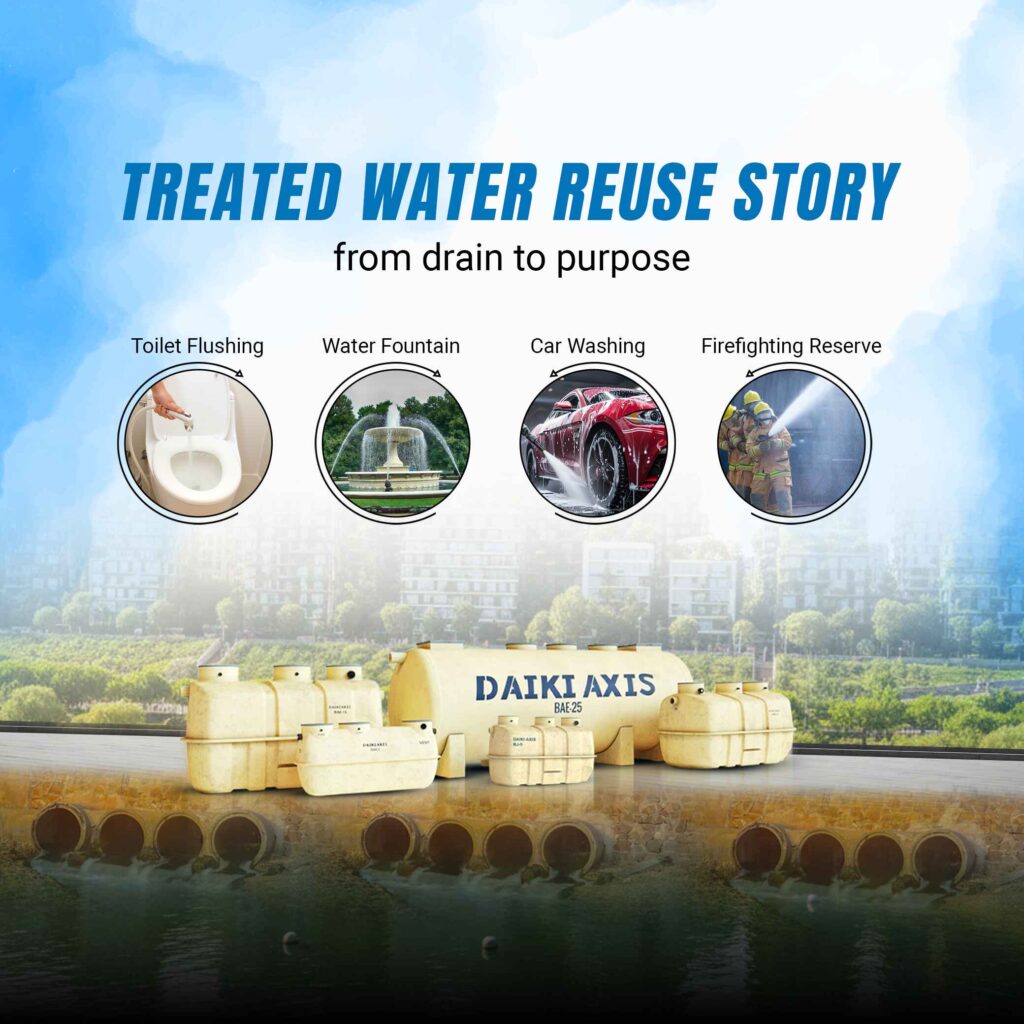
- Water Reuse: By recycling treated water for toilet flushing, gardening, and car washing, a building can reduce its WASA bill by 30–50%.
- Minimal Maintenance: Unlike conventional systems, Johkasou does not require a full-time resident operator, significantly cutting labor costs.
Compact STP for Apartments: Solving the Space Crisis in Dhaka
Dhaka is one of the most densely populated cities on Earth. In neighborhoods like Banani, Dhanmondi, and Mirpur, every square inch of land is worth a fortune. A conventional concrete STP requires a massive footprint and deep excavation that can threaten the structural integrity of neighboring buildings.
The compact STP for apartments offered by Daiki Axis solves this. Because the entire treatment process is contained within a single, modular FRP tank, it can be installed in tight spaces—under driveways, in small backyard corners, or even in basement levels with minimal modification. This allows developers to maximize their “sellable” area while remaining 100% compliant with the RAJUK 5-katha mandate.
From Global Leader to Local Partner: The Success of Daiki Axis Bangladesh
The launch of Daiki Axis Bangladesh was a major milestone for the country’s water sector, attended by the Minister of Housing and Public Works and the Mayor of Dhaka. This 100% Japanese investment has already delivered high-impact results across the country:
- Epyllion Group (Gazipur): Successfully implemented a Johkasou STP with an 80m3/day capacity, ensuring the factory meets global buyer standards for sustainability.
- Tangail Sadar Medical: A 250m3/day system that treats wastewater so effectively it is used daily for gardening and landscaping.
- Mayor’s House (Uttara): A compact 10m3/day unit demonstrating that even individual residential villas can lead the way in environmental stewardship.
Conclusion: Building the Bangladesh of 2030
We can no longer afford to treat water as a “use once and throw away” commodity. As Dhaka faces record-breaking heatwaves and a receding water table, the adoption of Japanese Johkasou technology is the only logical path forward.
By choosing Daiki Axis Bangladesh, you aren’t just buying an FRP tank; you are investing in a future where our rivers are clean, our buildings are self-sufficient, and our cities are truly livable. The “sludge-free” revolution is here—is your building ready?
Are you planning a new project? Don’t let your construction permit get delayed. Contact the top onsite STP supplier in Bangladesh today for a customized, compliant, and cost-effective wastewater solution.
FAQ:
- Is an STP mandatory for 5-katha plots? Yes, under the RAJUK DAP 2022-2035, any plot of 5-kathas or more must have a functional STP to receive a construction permit or occupancy certificate.
- What makes Johkasou different from a septic tank? A septic tank is a storage vessel with minimal treatment; Johkasou is a full biological treatment plant that produces reusable water and minimal sludge.
- Can treated STP water be reused? Absolutely. Properly treated Johkasou water is safe for non-potable uses like toilet flushing, construction work, car washing, and irrigation.