
If you’ve walked through the streets of Panthapath, Karwan Bazar, or Mirpur-10 following the heavy downpours of early May 2026, you’ve seen the reality of Dhaka’s “concretization” first-hand. As roads transform into rivers, the city’s aging, overstrained drainage system struggles to keep up. This isn’t just a seasonal inconvenience; it is a symptom of a massive urban shift that is fundamentally changing how we build in Bangladesh.
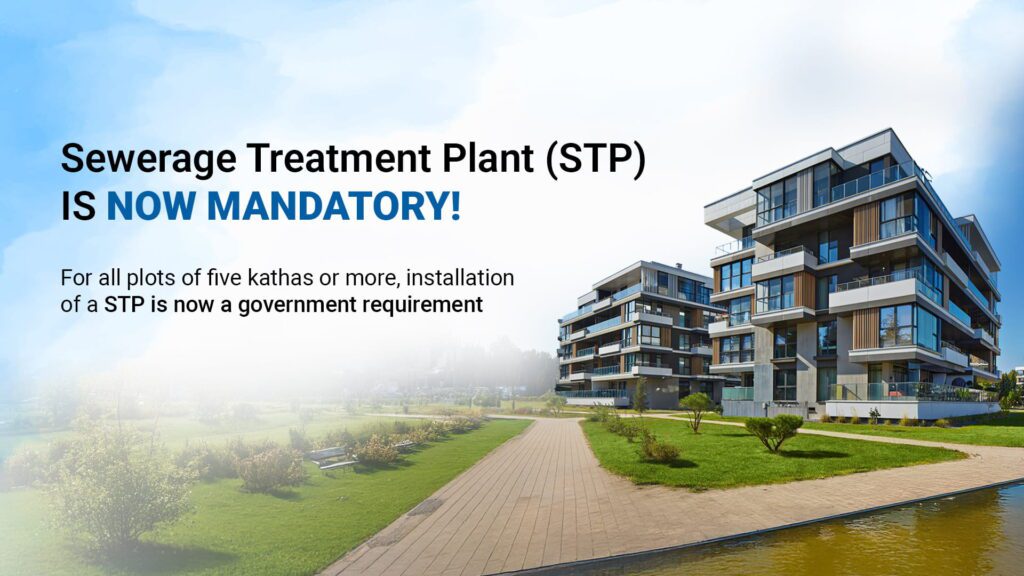
For property owners and real estate developers, the most significant change isn’t the weather—it’s the law. Under the RAJUK Detailed Area Plan (DAP) 2022–2035 and the newly implemented 2025 amendments, the rules for construction permits have entered a strict new era. If you are planning a project on a plot of five kathas or more, a functional Sewage Treatment Plant (STP) is no longer an “extra” feature—it is a non-negotiable requirement for legal approval.
Why the RAJUK STP Mandate 2025 is a Game-Changer
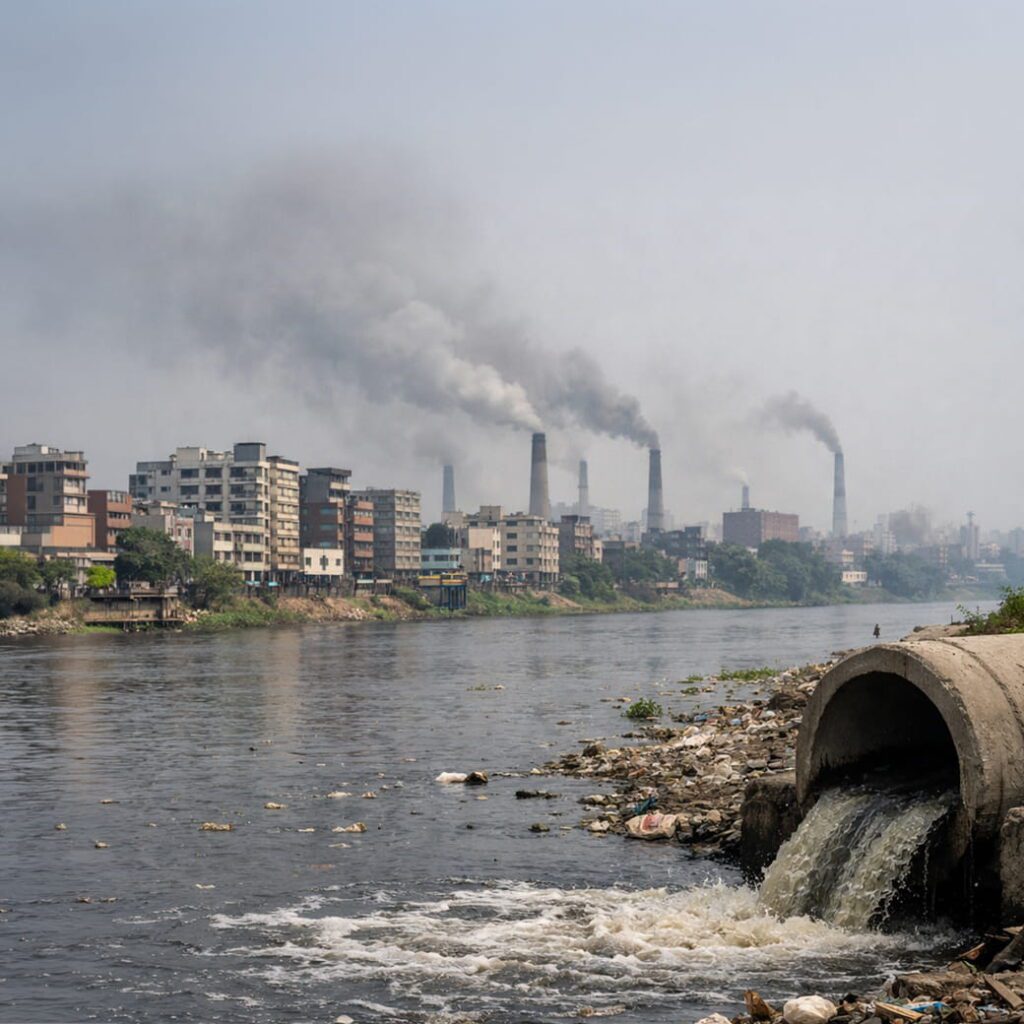
For decades, Dhaka’s wastewater management relied on a mix of a limited centralized network and individual septic tanks. However, centralized sewerage covers only a tiny fraction of the city, and traditional septic tanks are increasingly viewed as “environmental fossils” that fail to meet modern safety standards.
The 5-Katha Threshold
The RAJUK STP requirement 2025 for 5-Katha Mandate specifies that any residential or commercial plot measuring five kathas (~3,600 square feet) or more must include an integrated, functional STP in its design. This policy serves two critical goals:
- Decentralization: Reducing the load on the city’s failed central sewer lines.
- Environmental Compliance: Ensuring that wastewater is treated at the source before entering the environment.
Under the updated Dhaka Metropolitan Building Rules 2025, your project’s architectural, plumbing, and STP designs must be submitted together through the Electronic Construction Permitting System (ECPS). Without a certified STP design, obtaining a Planning Permit or a final Occupancy Certificate is now virtually impossible.
Understanding the ECR 2023 Wastewater Standards
While RAJUK manages where you build, the Department of Environment (DoE) regulates how you discharge waste. The Environment Conservation Rules (ECR) 2023 have replaced the old 1997 framework with significantly tougher limits.
For domestic sewage, the maximum permissible limit for Biochemical Oxygen Demand (BOD5 at 20°C) has been slashed to 30–40 mg/L. To put this in perspective, a standard septic tank often discharges water with a BOD far exceeding $100 mg/L$. Failing to meet these new standards can lead to severe penalties, including fines of up to Tk 10 crore or imprisonment under the RAJUK Draft Ordinance 2025.
| Parameter | Unit | ECR 2023 Standard Limit |
| pH | – | 6.0 – 9.0 |
| BOD5 (at 20°C) | mg/L | 30 – 40 |
| Suspended Solids (SS) | mg/L | 100 |
| Nitrate | mg/L | 250 |
| Coliform | MPN/100ml | 1000 |
The Human Impact: Why Dhaka’s “2-Meter Drop” Matters
This regulatory push isn’t just about bureaucracy; it’s about survival. Dhaka’s groundwater table is dropping by 2 to 3 meters every year. In central hubs like Motijheel and Gulshan, the water level has plummeted from 6 meters in 1970 to over 73 meters today.
By making STPs mandatory, the government is forcing a transition toward water reuse. Treated water from a high-quality STP can be recycled for:
- Toilet flushing (reducing freshwater demand by ~30%).
- Gardening and landscaping in urban green zones.
- Car washing and dust control during construction.
Transitioning from Septic Tanks to Japanese Johkasou Technology
For many Dhaka residents, the word “STP” conjures images of large, smelly concrete tanks that are expensive to run. This is where Japanese Johkasou technology provided by Daiki Axis Bangladesh is transforming the market.
What is Johkasou?
Developed and perfected in Japan, Johkasou is a prefabricated, decentralized system that treats wastewater right where it is generated. Unlike conventional STPs, it is housed in a compact, durable Fiber-Reinforced Plastic (FRP) tank.
Why Johkasou is the ideal choice for Dhaka’s 2026 Building Rules:
- Space Efficiency: Its modular design fits under driveways or parking spots, making it perfect for space-crunched plots in Uttara, Banani, and Dhanmondi.
- Odor-Free & Silent: Advanced aeration blowers ensure the system operates at less than 50 dB with zero smell, allowing it to be installed near residential units without complaints.
- Low Maintenance: Johkasou systems are automated and do not require a full-time resident operator, significantly lowering OPEX.
- Japanese Quality Certification: These systems meet the strictest global standards and are fully compliant with Bangladesh’s ECR 2023 and RAJUK requirements.
How to Get Your Construction Permit in Dhaka (2026 Update)
Navigating the Electronic Construction Permitting System (ECPS) can be daunting. Here is the streamlined path for modern building approval:
- Planning Permit (formerly LUC): Apply via rajuk.ecps.gov.bd. You will need your land registry, mutation, and NID.
- Design Submission: You must submit five sets of drawings, including a detailed Plumbing and Sanitary Design that features your STP.
- STP Selection: Choosing a pre-engineered solution like Johkasou simplifies this step, as the technical specifications and discharge guarantees are already certified.
- Inspection & Occupancy: RAJUK inspectors will verify that your STP is functional before issuing an Occupancy Certificate, which is now valid for a lifetime without the old 5-year renewal requirement.
The Financial Reality: ROI and Rising Fees
While installing an STP is an initial investment, the long-term cost of not having one is rising. RAJUK has proposed a fivefold hike in approval fees for 2025/2026, and WASA tariffs increased by 10% in July 2024 to Tk 16.70 per 1,000 liters for residential use.
By recycling water through a Johkasou system, an average apartment complex in Dhaka can save thousands of Taka on monthly utility bills while avoiding the threat of “environmental compensation” fines from the DoE.
Building a Sustainable Dhaka Together
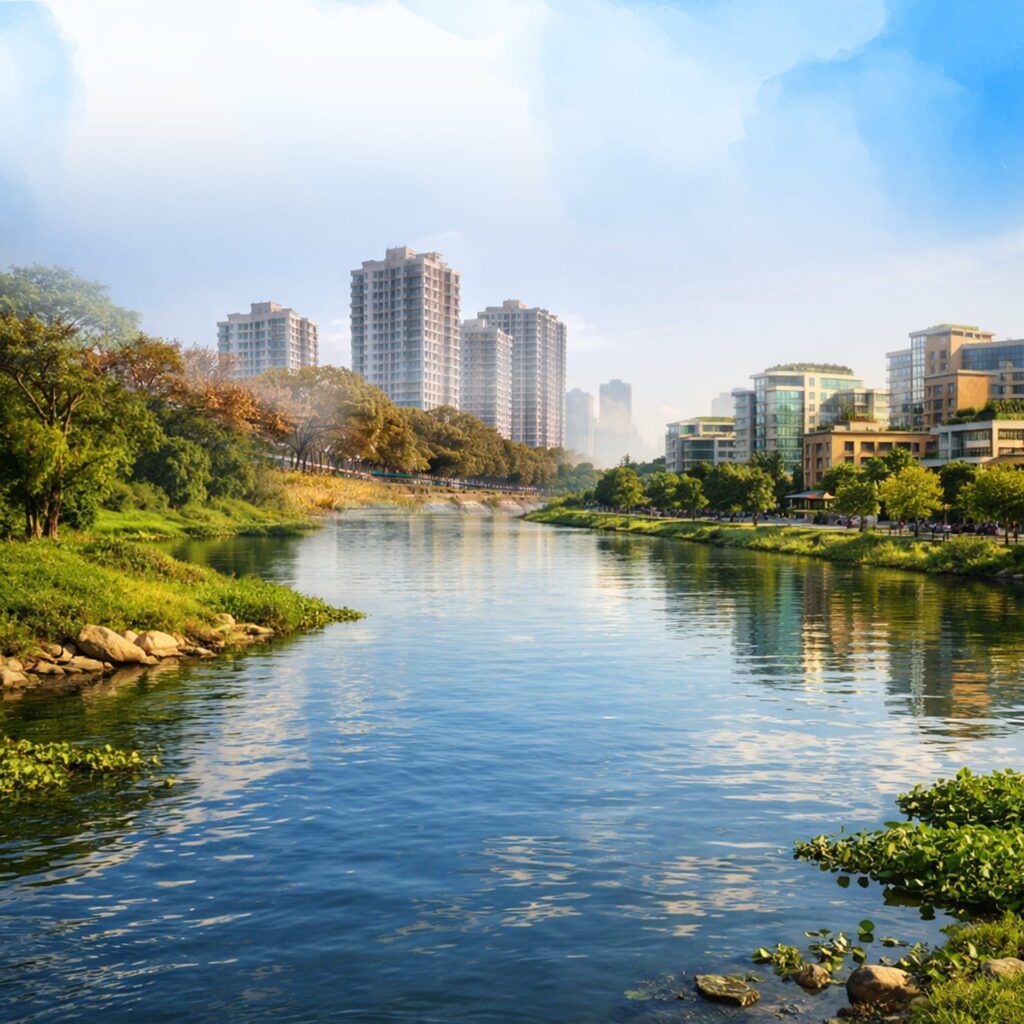
As we look toward the future of metropolitan Dhaka, the goal is clear: Circular Water Management. Every building on a 5-katha plot has the potential to become a self-sustaining ecosystem. By adopting Japanese innovation through Daiki Axis Bangladesh, you aren’t just following a mandate—you are protecting our rivers, recharging our aquifers, and ensuring that the Dhaka of 2030 remains a livable, thriving megacity.
Ready to future-proof your property?
Consult with the top onsite STP supplier in Bangladesh today to ensure your 2026 construction permit is approved without delay.
FAQ:
What is the RAJUK STP mandate for 2025?
Any plot 5 kathas or larger must have a functional STP for building approval.
What are the ECR 2023 discharge limits for sewage?
The BOD limit is 30-40 mg/L.
How do I apply for a construction permit in Dhaka?
Applications are made online via the RAJUK ECPS portal.
Which is the Best compact STP for apartments in Bangladesh?
Japanese Johkasou technology is the most efficient, space-saving solution.