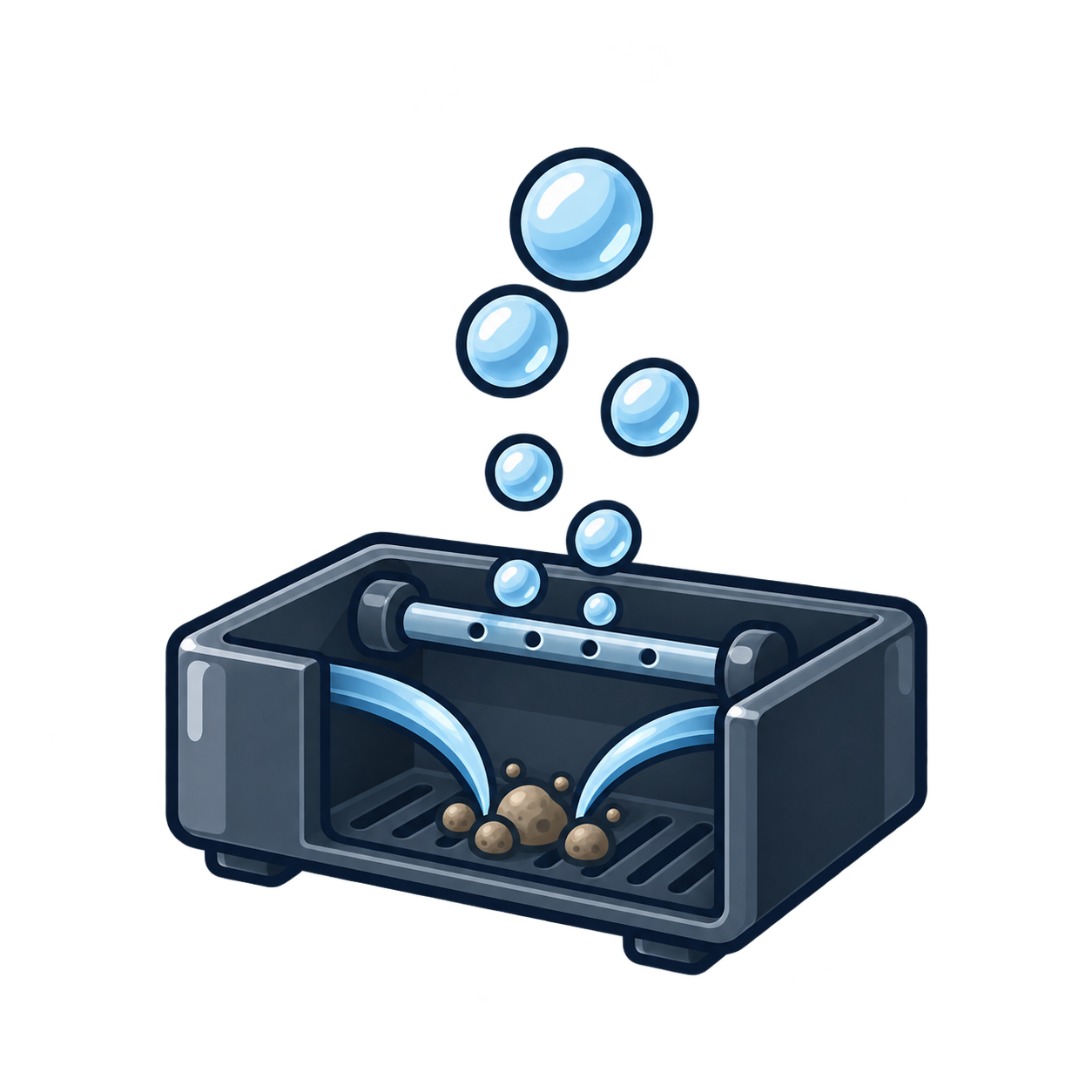
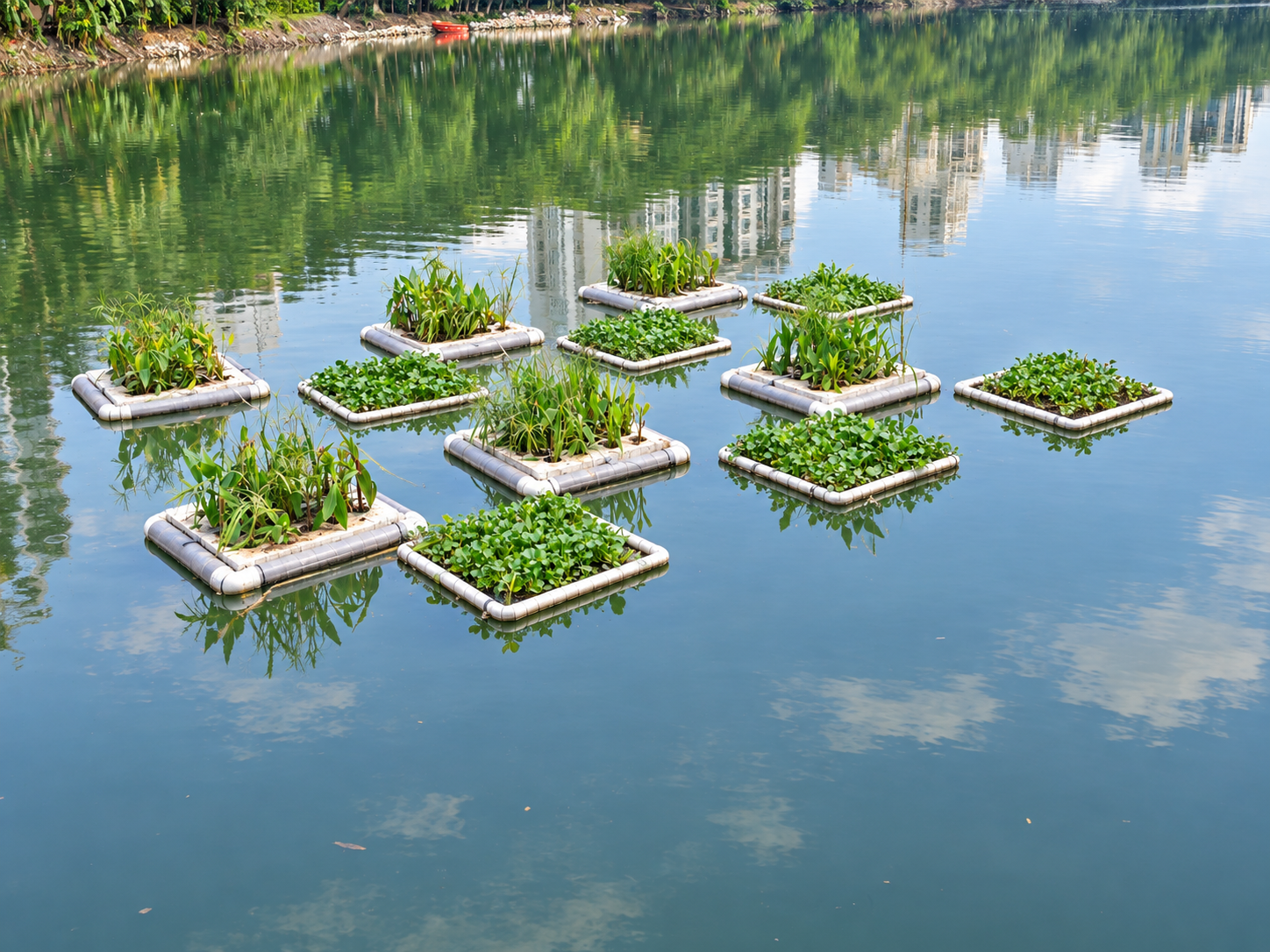
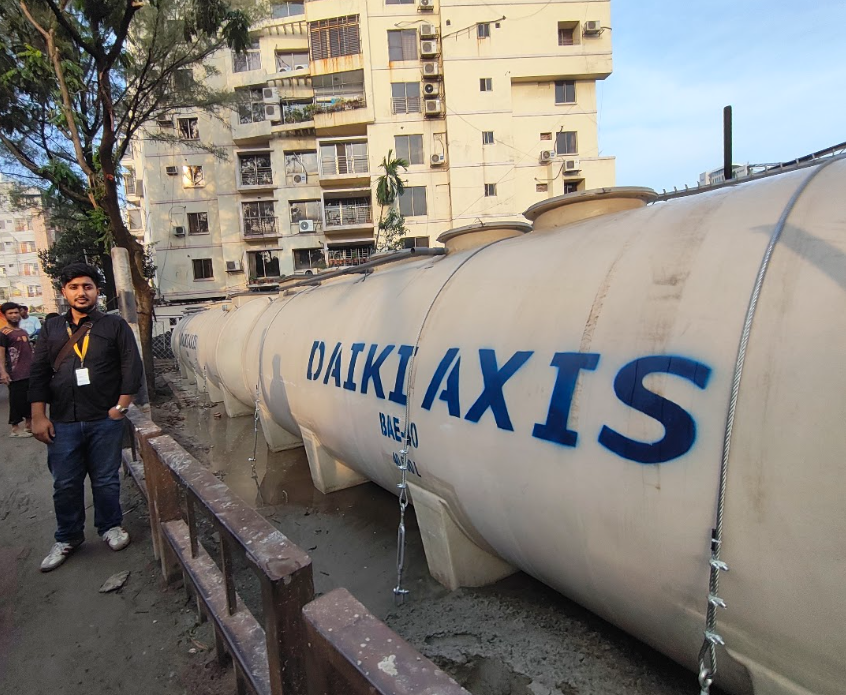
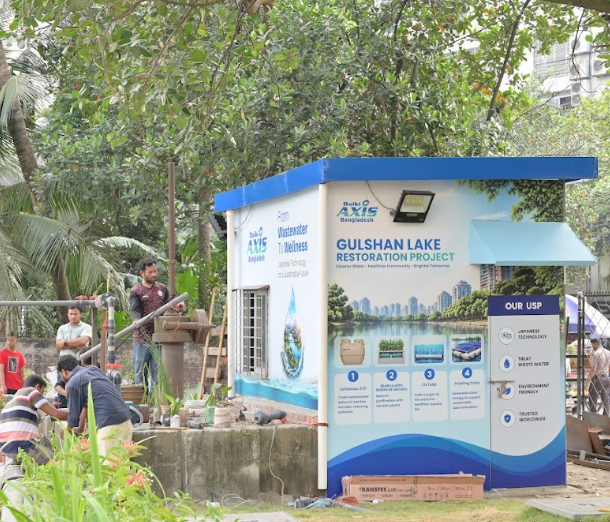
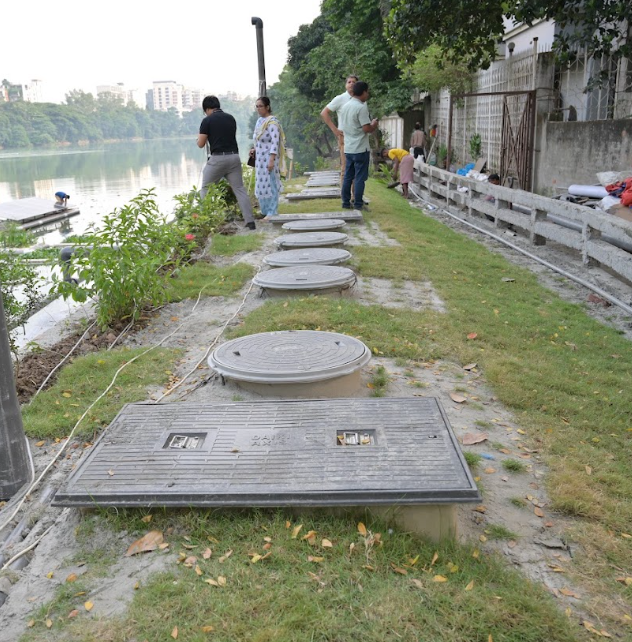
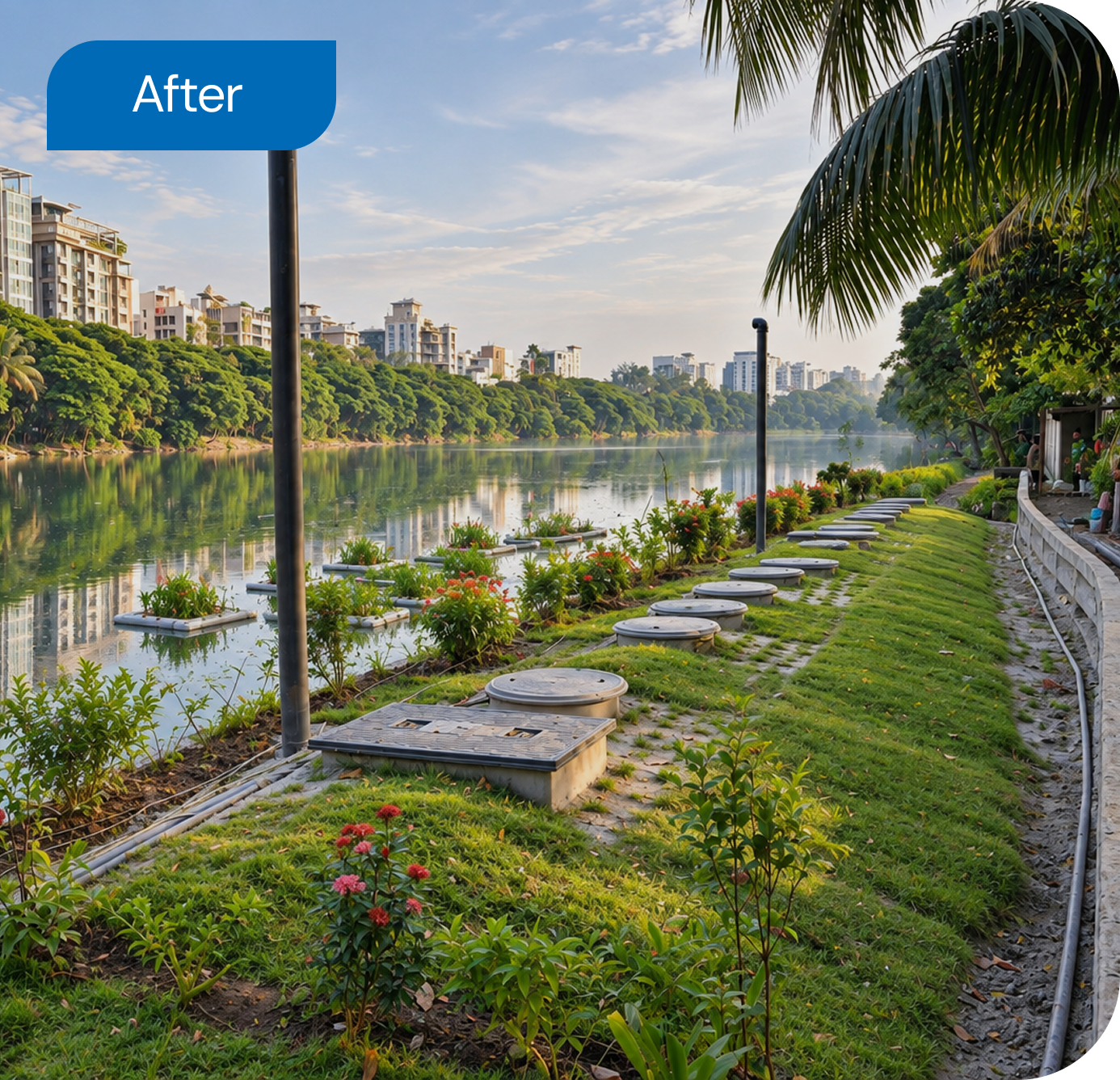
At Kalachandpur, a 200 KLD Johkasou plant treats sewage before it reaches the water. A submerged BioBox, floating wetland garden and OxTube work on the water already in the lake, supported by 6 kW floating solar.
Wastewater is treated before discharge into the lake
Alakeunder increasing pressure
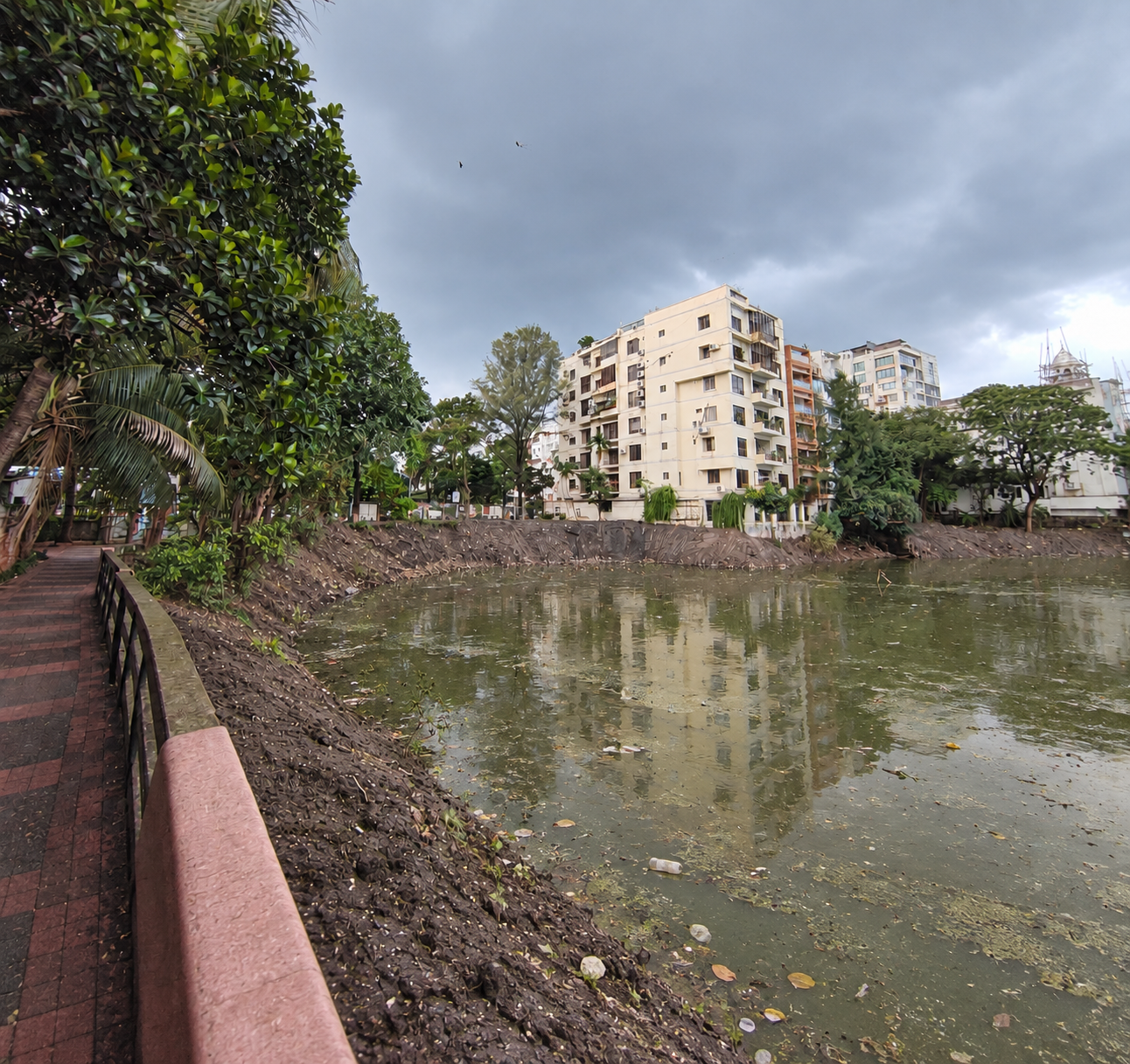
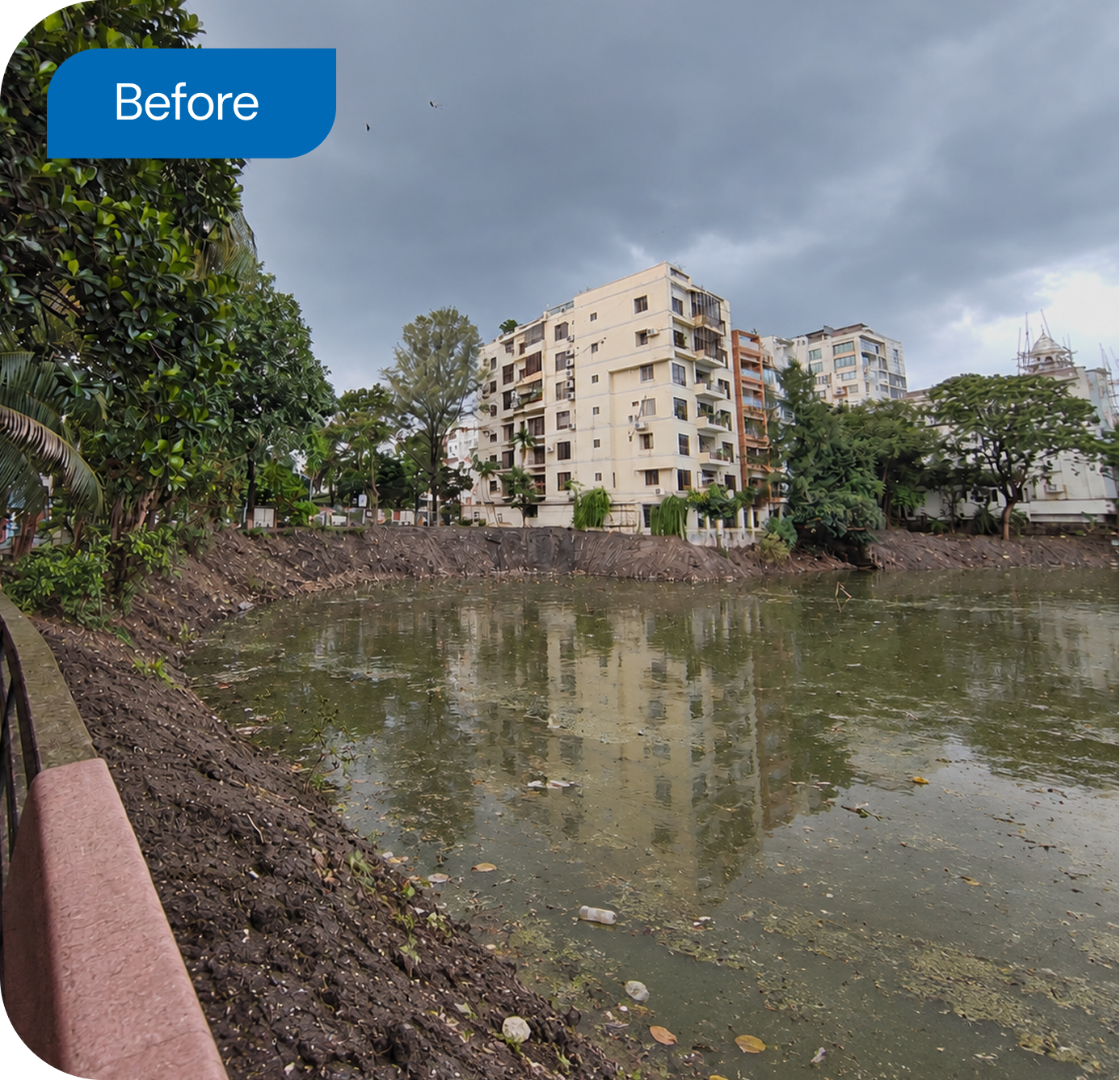
Dhaka’s urban lakes were never designed to receive sewage. As the catchments around them filled in, domestic wastewater from surrounding buildings began reaching the open water untreated, day after day. Oxygen falls as bacteria consume the incoming organic load. The water turns septic, odour develops, visibility drops and floating waste spreads across the surface. The Government has taken up the restoration of this lake. Daiki Axis’s role is the design, supply, installation and operation of a working system that treats incoming sewage and improves the water already in the lake.
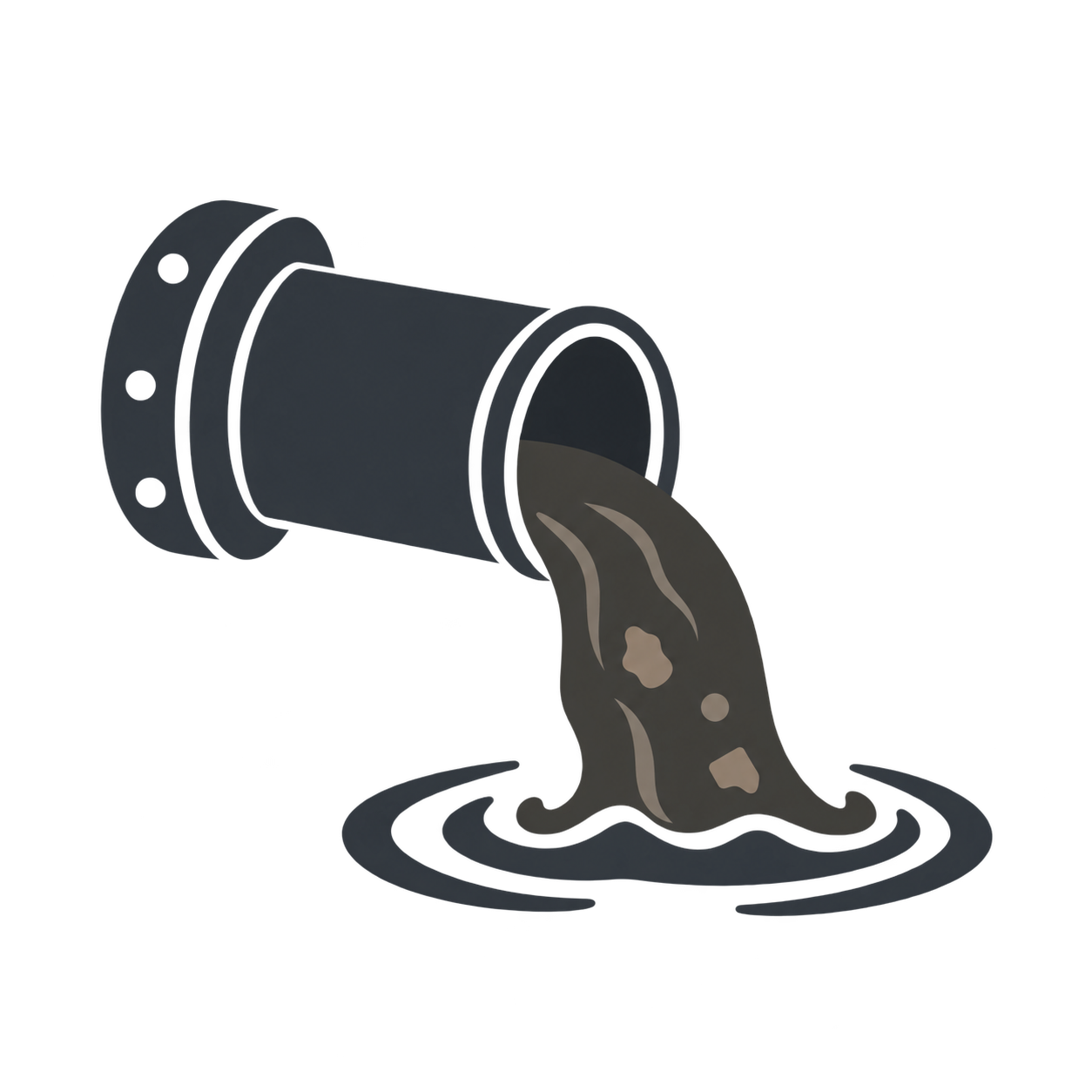
Untreated sewage keeps arriving
Domestic wastewater from the surrounding catchment reaches the waterbody without any treatment step.
Water quality falls year on year
Low dissolved oxygen, persistent odour and dark, turbid water are visible through most of the year.
Floating waste spreads across the surface
Waste drifts over open water, which makes collection difficult and removes the amenity value of the lake.
Problems inwaterbody
What flows in
Raw, untreated sewage entering the lake every single day.
Our Answer for problem 1
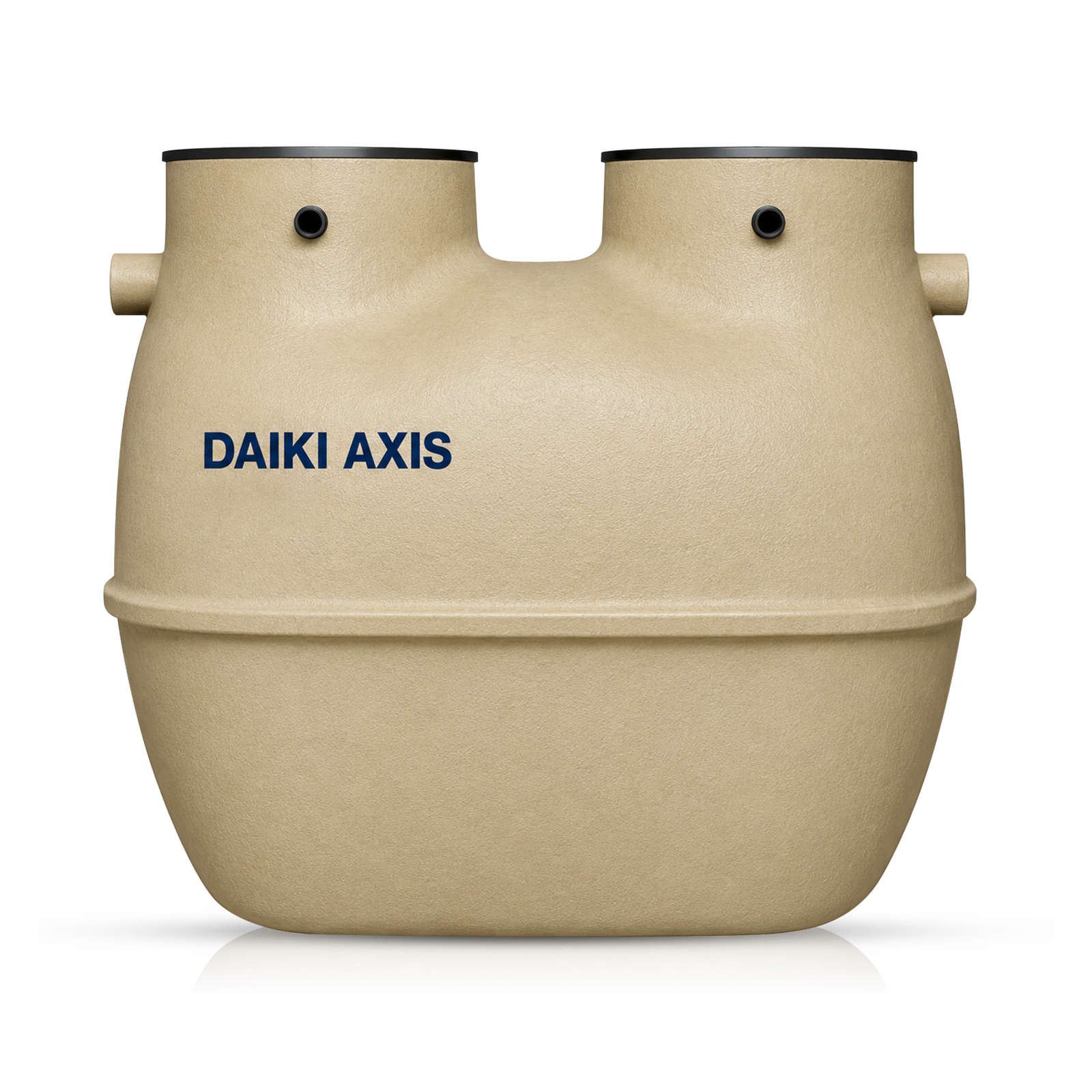
Johkasou STP · 200 KLD Treat the sewage before it reaches the water.
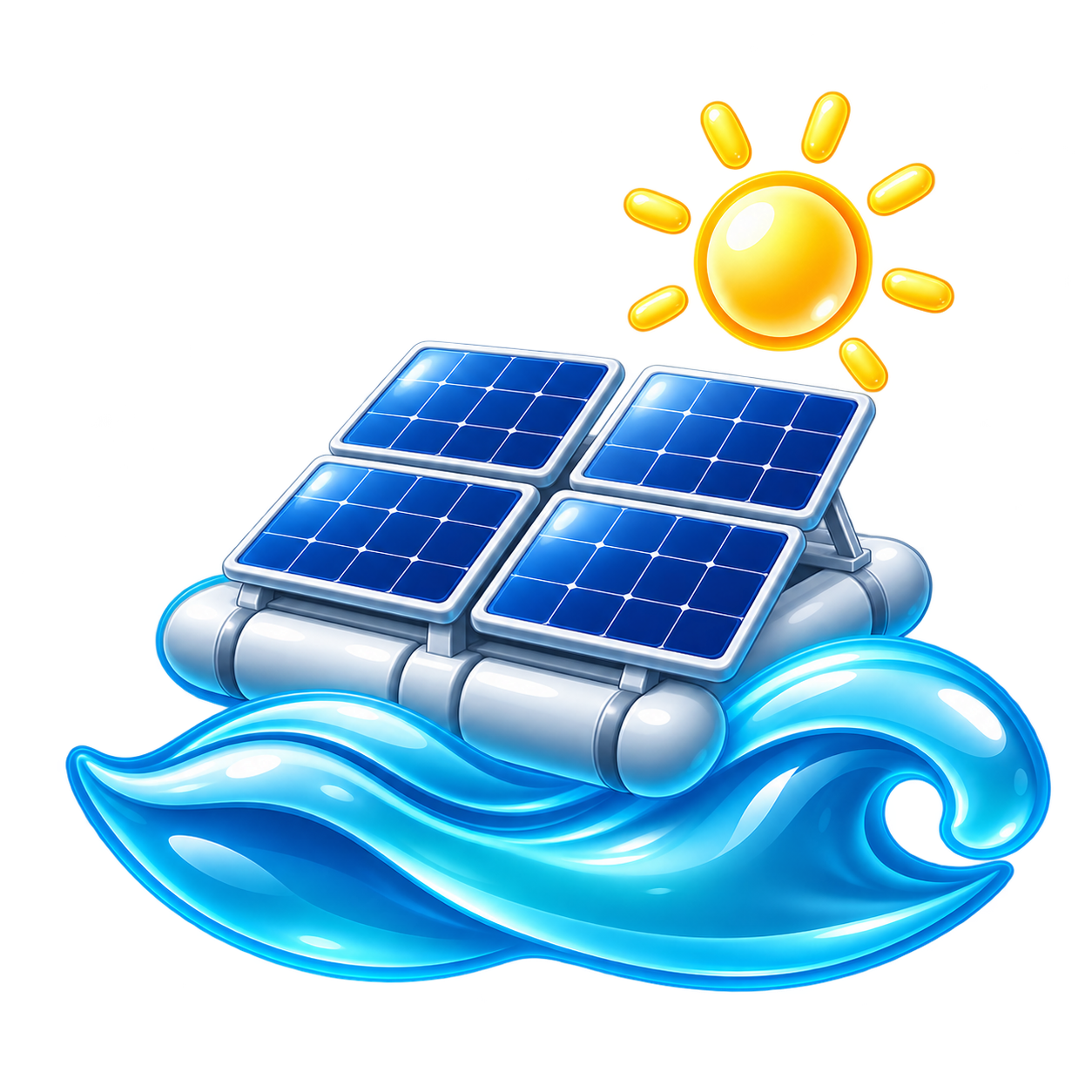
☀ A 6 kW floating solar system powers all three systems with clean, renewable energy.
The systemat a glance
Johkasou
Technology
Floating Solar
that contaminate natural water bodies
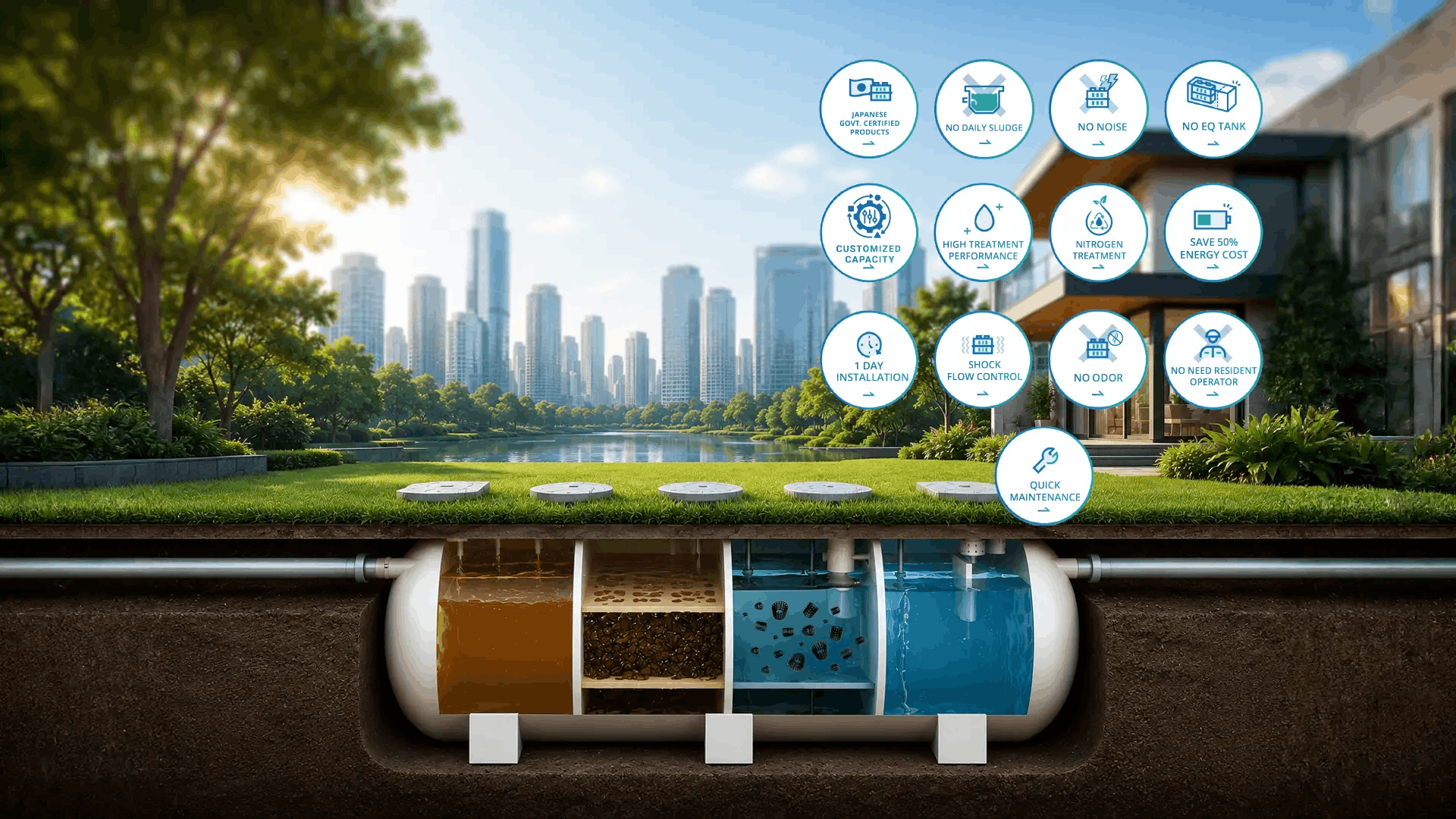
Johkasou treats sewage at its source
Johkasou treats wastewater where it is produced instead of relying on a trunk sewer to reach a central plant. At Kalachandpur, the unit collects raw sewage from the surrounding catchment and treats it on site.
Collection - Raw sewage enters from the surrounding catchment.
Treatment - The Johkasou unit treats up to 200 KLD on site.
Discharge - Treated water returns to the lake through a fountain.
Aeration - The fountain increases air contact as the water falls.
Collection support - Wave action pushes floating waste toward one collection point.
The fountain is functional. Its wave action helps move floating waste to one side for collection.
Powered from the surface it cleans
6kW
The floating solar array supports the Johkasou fountain discharge, BioBox aeration and OxTube operation. It uses the lake surface, so the pilot needs no separate land for solar generation.
Reduces electricity drawn from the grid
Generates power at the point of use
Avoids extra land acquisition
Two tracks,one waterbody
Source Treatment : Track 1
Raw sewage
Johkasou 200 KLD
Treated water
Fountain discharge
Oxygen lifts waste waves move it aside
Raw sewage
Johkasou 200 KLD
Treated water
Oxygen lifts waste waves move it aside
Fountain discharge
Beneath both tracks 6 kW floating solar supplies energy to both tracks.
The systemat a glance
Project photographs show the in-lake installation, shoreline equipment and floating treatment elements at Kalachandpur.
Visible change, supported bycontinuous treatment
Dark, turbid water · persistent odour · floating waste across the surface · low dissolved oxygen
Visibly clearer water · odour noticeably reduced · waste moved toward collection points · oxygen raised by aeration
Why this model suits urbanwaterbodies
The system fits locations where land is scarce, lake closure is impractical and both incoming pollution and existing water quality need attention.
01
Treats at the source
The sewage load is handled before it reaches open water.
02
No draining required
In-lake treatment works while the waterbody remains in use.
03
Compact footprint
No large land acquisition for heavy civil works.
04
Solar supported
Renewable power reduces dependence on grid electricity.
05
Visible to the public
The fountain and wetland show residents that the system is active.
06
Modular and replicable
The approach can be sized for other lakes and canals.
Kalachandpur Lake RestorationPilot Project
A compact reference for engineering, procurement and public-sector review.
Location - Kalachandpur, Dhaka
Treatment capacity - 200 KLD Johkasou
Power support - 6 kW floating solar
Scope - Design, supply, installation and operation
Frequently askedquestions
What is Johkasou technology?
Johkasou is a Japanese decentralised wastewater treatment system. Instead of piping sewage across a city to a central treatment plant, a Johkasou unit treats it on the site where it is generated. That makes it suitable for locations where a trunk sewer network does not reach or where central treatment capacity is limited.
Does the lake have to be drained for this system to work?
No. Both the BioBox and the OxTube operate inside the lake while it holds water. The lake continues to function normally throughout installation and operation.
What is the treatment capacity of the Kalachandpur pilot?
The Johkasou unit is rated at 200 KLD. The in-lake units, the BioBox and the OxTube, work on the surrounding body of water rather than on a rated flow.
Does the system need a grid electricity connection?
A 6 kW floating solar array on the lake surface supports the three treatment processes and reduces the electricity drawn from the grid.
Can this approach be applied to other lakes and canals?
Yes. The combination of source treatment, in-lake treatment and floating solar is modular and can be sized to other waterbodies without draining them or acquiring land for civil works.